Tree Pruning Services: What Actually Keeps Your Tree Alive
Most trees get pruned in winter (Nov–Jan) on our schedule, while they’re dormant and least stressed. Oaks are the one tree we treat Texas A&M Forest Service differently, as it is clear that pruning or wounding oaks between February and June risks spreading oak wilt, one of the most destructive tree diseases in Texas. Red oaks, common across Lubbock, can die within a month of infection.
This is exactly the kind of detail a rushed or inexperienced crew misses. We don’t if an oak needs emergency work during that window, we paint the wound immediately to cut infection risk.
A Storm Damage Your Lawn Badly? We’ll Fix It
Dust storms and sudden freezes are two of the biggest reasons a routine trim turns into an emergency call:
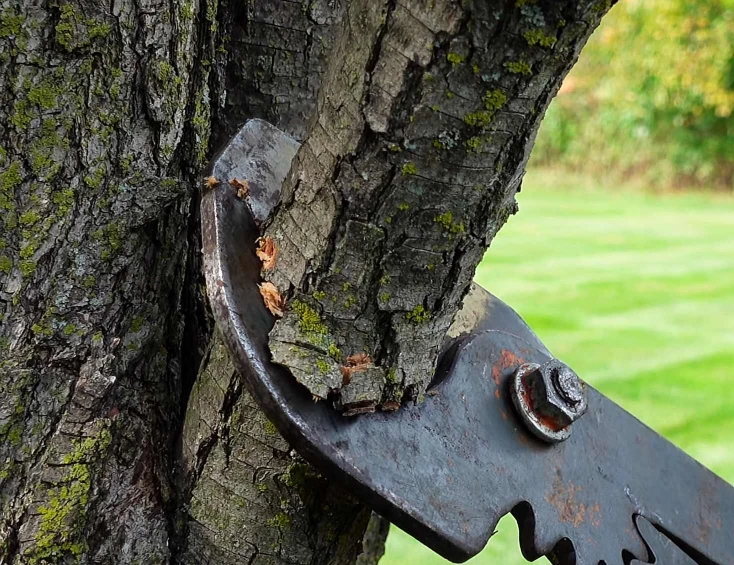
- 40–60 mph wind events snap weak branch unions on Hackberry and Mulberry trees especially
- Sudden ice leaves cracked or dead limbs that aren’t obvious until the next windstorm brings them down
- Storm cleanup A storm that damages a tree usually scatters debris across the whole yard, not just underneath. It needs cleanup & maintenance that handles the rest of the property.
Call us the same day a storm hits and we’ll get eyes on anything that looks unsafe.
Trim or Full Removal? Here’s How to Tell
Most of the time, the difference between Tree trim and Tree Removal comes down to a handful of specific signs not a guess. If a tree needs trimming, we never remove it. See the signs below and be clear if your tree needs trimming or removing.
| If you’re seeing… | It’s usually… |
|---|---|
| A few dead or damaged branches, the tree otherwise healthy | A trim |
| Overgrown branches near your roof, power lines, or a walkway | A trim |
| A minor lean that’s always been there, tree stable | A trim |
| Tree still leafing out normally each year | A trim |
| Large dead branches throughout the canopy | Possible removal |
| A sudden or worsening lean | Possible removal |
| Deep cracks or splits in the trunk or major limbs | Possible removal |
| Mushroom-like growth at the base (sign of root decay) | Possible removal |
| A hollow sound when the trunk is tapped | Possible removal |
| More than half the canopy dead or damaged | Possible removal |
Permits & City Rules — We Already Know Them
In most cases, you don’t need a permit to remove a tree on your own private property in Lubbock. Permits come into play for trees in the public right-of-way (the strip between sidewalk and curb) — those are technically city property. If your situation touches an HOA, a shared property line, or anything near a right-of-way, we’ll flag it before work starts so there are no surprises.
We’ll Get You Compliant, Fast
Several Lubbock HOAs enforce specific rules on tree height and canopy clearance over sidewalks and streets. If you’ve got a notice sitting in your inbox, we can usually get a compliant trim scheduled the same week. No need to negotiate an extension while you wait on a landscaper.
Why Choose Us For Tree Trimming & Purning Services
What Happens When You Call Us
You Call or Request a Quote
Tell us what you’re seeing, even if you’re not sure what it means.
We Assess It On-Site
Tree health, structural risk, and the right timing for that specific species.
You Get a Clear Plan and Price
Before anything gets cut.
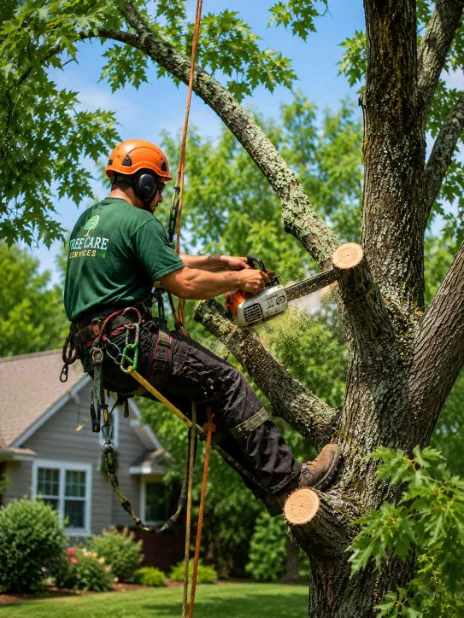
We Do the Work Right
Proper pruning technique, oak wounds painted immediately when timing can’t wait.
We Clean Up Completely
No debris left behind, storm damage included.
We Works for Every Type of Lubbock Property
- Single properties or a full portfolio
- Commercial Properties
- Residential Properties
What Is Tree Trimming & Removal Cost in Lubbock?
Every job’s different tree size, how many, how hard they are to reach, and whether it’s a trim
or a full removal all move the number. Ask and we’ll give you a straight answer before we touch a branch.
Get a free, no-pressure assessment — we’ll tell you what actually needs doing, not just what’s billable.
Got Questions?
We’re happy to help. If you can’t find the info you’re looking for, please don’t hesitate to reach out to us!
Call us +18064600800