What’s actually happening in your yard
Most Lubbock yards sit on a layer of caliche, a hard, calcium-carbonate-rich soil layer that compacts easily and barely lets water through. Over time, foot traffic, mowing, and Lubbock’s own dry weather pack it down even further.
The result: water pools instead of soaking in, roots stay shallow because they can’t push through the hardpan, and Bermuda grass struggles even when it’s being fed and watered correctly. Lawn aeration is the one step that actually fixes the soil itself, not just the symptoms sitting on top of it.
Aeration only helps if water actually reaches the loosened soil if you’re still seeing dry patches afterward and uneven coverage, check our sprinkler repair service.
Why Your Lubbock Lawn Needs Aeration
Compacted caliche soil actively works against everything else you’re doing for your lawn. Water from irrigation or the rare Lubbock rain sits on the surface instead of soaking down to the roots, which means it evaporates or runs off before your grass ever benefits from it. Fertilizer applied to compacted soil behaves the same way it feeds the surface, not the root zone where it actually matters. Aeration opens the door, but feeding and weed timing matter just as much once it’s done our weed control & fertilization program is built to follow right behind it
What does an aerator do for a lawn?
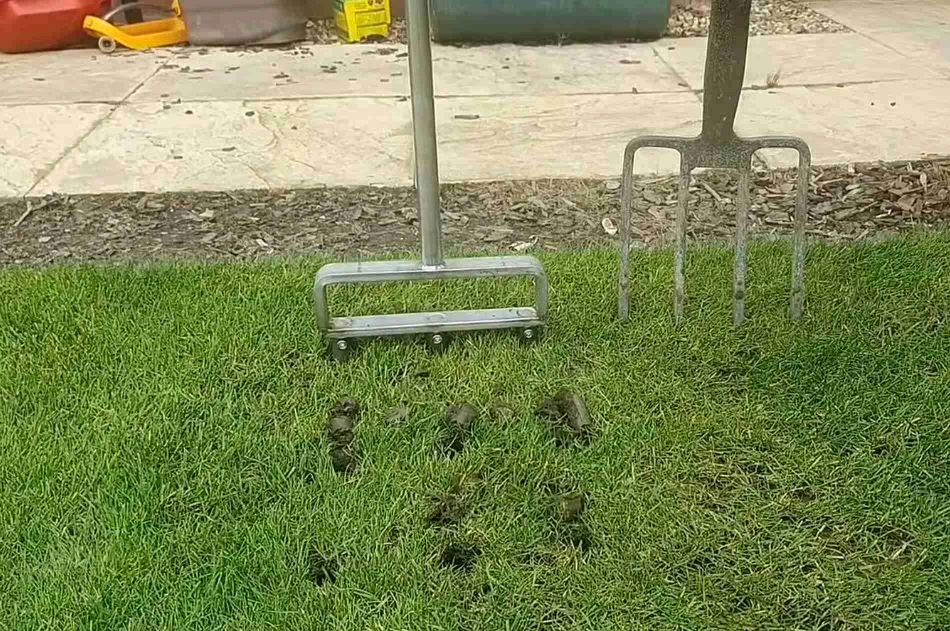
A core aerator pulls small plugs of soil out of the ground, creating channels that let water, air, and nutrients reach the root zone directly instead of being blocked by compacted soil sitting on top.
What is the purpose of aerating a lawn?
The purpose is to relieve soil compaction so roots can grow deeper and stronger. Deeper roots mean a lawn that handles Lubbock’s heat, wind, and dry stretches noticeably better.
What Aeration Actually Does for Your Yard
Lawn aeration strengthens the lawn’s resilience heading into Lubbock’s hot, dry summer stretch
What Happens During an Aeration Visit
Assessment
We check compaction level and soil condition across the yard, since some areas, like near driveways and high traffic paths, are typically more compacted than others.
Core Aeration
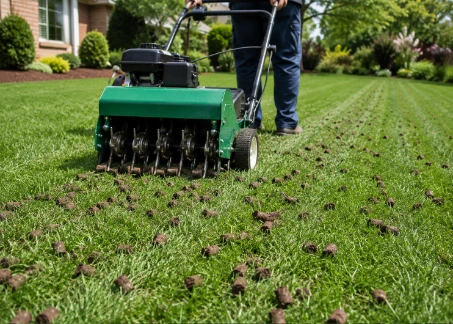
A machine pulls small plugs of actual soil out of the lawn, rather than just poking holes, leaving channels for water, air, and nutrients to reach the roots.
Plug Breakdown
The removed soil plugs are left on the lawn to break down naturally over the following weeks, returning organic material to the surface.
Optional Follow Up
Aeration is commonly paired with fertilization or overseeding immediately after, since nutrients and seed reach the soil far more effectively through freshly opened channels.
How Much Does Aeration Actually Cost in Lubbock?
In Lubbock, TX, professional aeration for a standard residential lawn generally runs $160–$240, with most bookings averaging around $190. Because Lubbock lawns often deal with heavily compacted clay and caliche soil, mechanical core aeration — which physically pulls plugs from the ground is strongly recommended over cheaper spike methods.
Pricing by lawn size
| Lawn Size | Price Range | Notes |
| Small (under 5,000 sq. ft.) | $120–$160 | Typically a single pass with a standard walk-behind aerator |
| Average (5,000–10,000 sq. ft.) | $160–$240 | Multiple passes over standard residential lots for optimal soil fracturing |
| Large (10,000+ sq. ft. / acreage) | $240–$450+ | Costs scale up due to time, fuel, and the need for commercial ride-on equipment |
Pricing by aeration method
| Method | Price Range | Notes |
| Core Aeration | $95–$230 | Pulls 2–3 inch soil plugs — the standard for West Texas clay and caliche, though it runs roughly 15–20% more than spiking |
| Liquid Aeration | $90–$145 | A sprayed solution requiring no heavy machinery; doesn’t break up intense compaction as immediately as mechanical plugs |
| Spike Aeration | $60–$225 | Solid tines punch holes without removing soil — cheaper, but can push clay sideways and worsen compaction over time |
Want a Custom Lawn Plan?
Exact price estimate can be done after a clear understanding of your lawn condition. Let us check your lawn
so we’ll provide you a clear pricing plan.
Core aeration vs. spike aeration — which is better?
| Core Aeration | Spike Aeration |
| Physically pulls small plugs of soil out of the ground | Solid tines punch holes without removing any soil |
| Truly relieves compaction by removing material | Can push soil sideways, worsening compaction in dense clay |
| Caliche and clay-heavy soil most of Lubbock | Lighter, sandy, or already-loose soil |
| $95–$230 | $60–$225 |
| Yes the standard recommendation | Not recommended on heavy caliche or clay |
Affordable Lawn Aeration That Fits Your Budget
Aeration is one of the more affordable lawn treatments relative to the impact it has — it’s a single annual service that makes every other treatment (fertilizer, iron, weed control) work better, which often means less product and fewer repeat treatments are needed to get the same result.
Don’t Wait Until the Damage Is Visible
By the time compacted soil shows up as thin, patchy, or struggling grass, the lawn has usually
already been fighting it for a while. Aerating before problems become visible rather than after is generally faster
and less expensive than trying to recover a lawn that’s already stressed, thin, or bare in spots.
Got Questions?
We’re happy to help. If you can’t find the info you’re looking for, please don’t hesitate to reach out to us!
Call us +18064600800