What’s actually happening in your yard
Almost every Lubbock lawn is dealing with the same three things: Bermuda grass that goes dormant brown every winter and needs specific feeding timed to its active season.
Caliche-heavy alkaline soil that locks up iron and causes yellowing, and wind-blown weed seeds, goatheads, sandbur.
Bindweed that move in faster here than almost anywhere else in Texas. A program that ignores any one of those three ends up chasing symptoms instead of fixing the lawn.
Compacted soil blocks fertilizer from reaching the roots the same way it blocks water if your yard hasn’t been aerated recently, our lawn aeration service is usually the faster fix.
Is Weed Control Important for Lubbock Lawns?
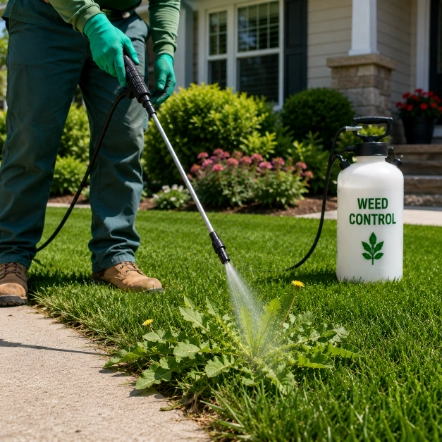
In Lubbock, aggressive weeds thrive in the hot, dry climate and poor soil, quickly stealing valuable moisture and nutrients from turfgrass. Effective weed management prevents lawns from becoming thin and patchy, ensuring your grass has the space, water, and nutrients needed to grow dense and resilient against West Texas heat. Treating weeds early is almost always cheaper and simpler than fixing the damage they cause once they’ve taken hold. Call us now→+1 806 460 0800
Seasonal Weed & Feed Timeline for Lubbock
| Season | Weed Control | Fertilization |
| Late Feb–Mar | Pre-emergent application | — |
| May | Spot post-emergent as needed | First feeding (once fully green) |
| Jun–Aug | Ongoing spot treatment | Repeat every 6–8 weeks |
| Sep–Oct | Fall pre-emergent (winter weeds) | Final feeding before dormancy |
| Nov–Jan | Dormant — minimal activity | None (dormant Bermuda) |
Our Weed Control Process
Pre-Emergent Application
Applied late February through early March, timed to soil temperature (around 55°F) rather than the calendar, since Lubbock springs shift year to year.
Post-Emergent Treatment
Targets weeds already growing, including goatheads, bindweed, sandbur, crabgrass, and common broadleaf weeds.
Bermuda-Safe Formulations
Products and rates selected so treatment doesn’t stress or damage the grass it’s meant to protect — this is the single most common DIY mistake we see corrected.
Follow-Up Spot Treatment
Goatheads especially tend to reappear from seed reserves already in the soil — a single application rarely finishes the job in year one.
Ready To Schedule a Plan?
If you’re tired of fighting your yard every weekend, or watching it get away from you between cuts,
a scheduled mowing plan built around how Bermuda actually grows in Lubbock fixes both problems at once.
Find out what a consistent schedule actually looks like for your yard.
Lawn Fertilization for Lubbock Grass Types
Bermuda grass (the dominant lawn type across Lubbock) has a specific feeding window: the first application goes down once the lawn is fully green, typically May with follow-up feedings every 6–8 weeks through August. Fertilizing dormant winter Bermuda doesn’t help and can encourage weed growth instead.
Alkaline, caliche-heavy soil — common across most Lubbock neighborhoods restricts how much iron and manganese grass roots can actually absorb, even when the nutrients are present in the soil. This is the direct cause of the yellowing so many homeowners assume is a watering problem. Iron supplementation, not just standard nitrogen fertilizer, is usually the actual fix.
St. Augustine (common in shadier yards) and Buffalo grass (common in xeriscaped or native yards) run on different schedules and lower nitrogen needs than Bermuda, if your yard has mixed grass types, a single blanket program isn’t the right approach.
3 Signs Your Lawn Needs Weed Control or Fertilization
When your grass looks pale or is turning yellowish in patches
If your lawn grows much less than an inch per week during its peak season.
When your lawn looks rough, weak, or struggles to recover from foot traffic or heat waves.
How Weed Control & Fertilization Work Better Together?
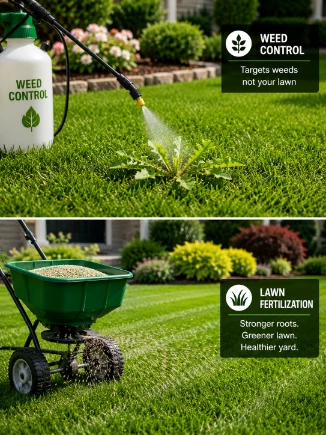
Weed control eliminates invasive plants that steal valuable space and nutrients, while fertilizer delivers essential nutrients to your grass. Together, they force weeds out and allow your lawn to grow a dense, healthy canopy that naturally chokes out future invaders.
Is Weed Control & Fertilization Safe for Kids and Pets?
This is one of the most common questions we get, and the answer is yes, if weed & fertilization process is done responsibly. Lawn care professionals use EPA-registered products applied at label-directed rates. These chemicals aren’t too strong.
But most products need a short drying period before the treated area is safe for regular foot traffic commonly a few hours. If you have specific concerns, tell us before your appointment and we’ll adjust the schedule or product choice.
Why Choose Us for Weed Control Services in Lubbock
15+ Years of Experience:
Long enough to know how Bermuda grass actually behaves through a West Texas summer, not just what a maintenance schedule says on paper.
Licensed & Insured:
Every crew member on your property is fully licensed and insured, so you’re covered no matter what.
Same-Week Scheduling:
Updates by text, no waiting weeks to get started, and no chasing down phone calls.
Real Local Coverage:
We offer both commercial and residential properties across Lubbock and the surrounding area.
Fast & Affordable:
Quick turnarounds and pricing that matches the job — no inflated quotes, no hidden add-ons.
Local soil knowledge:
specific experience with caliche/alkaline treatment if true.
Advanced Equipment:
Commercial-grade mowers and tools built for Lubbock’s tough caliche soil and thick Bermuda grass.
Trusted Team:
Same crew every visit, background-checked and trained — never a stranger showing up at your door.
DIY vs. Professional Treatment
Store-bought weed-and-feed products aren’t formulated for alkaline caliche soil, and getting pre-emergent timing wrong by even a couple of weeks can mean an entire season of goatheads. A thick, weed-free lawn still needs to be cut at the right height to stay that way we mow lawns around Bermuda’s growing season. The two areas where professional treatment tends to matter most: timing precision (soil-temperature-based, not calendar-based) and product selection for high-pH soil (generic products often underperform here). Plenty of Lubbock homeowners handle mowing and basic upkeep themselves and bring in help specifically for the weed/fertilization program, which is common and reasonable.
Got Questions?
We’re happy to help. If you can’t find the info you’re looking for, please don’t hesitate to reach out to us!
Call us +18064600800